



The love did not go anywhere. What went somewhere is the ease of talking.
The thing that used to feel natural between you now feels careful. Managed. Both of you have quietly learned which topics to avoid and which version of the other person to present to keep things from escalating into the same argument again.
That pattern does not fix itself. It compounds. And for Arab couples specifically, there is an extra layer: the people you would normally go to- family, close friends- are often too close to the situation to be useful and too connected to both of you to be trusted with the real version of what is happening.
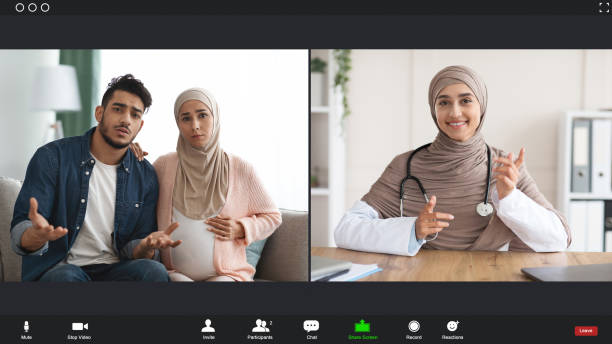
This is what online marriage counseling for Arabs was built for. Not a judge. Not a mediator with a verdict. A structured space where both sides of a conversation can finally be heard by someone who understands the cultural weight of what you are carrying into it.
It usually starts with understanding why Arab couples wait far longer than they should before asking for help.
Why Arab Couples Delay Marriage Counseling Longer Than They Should
The delay is almost never about not caring. It is about the specific social cost of admitting the marriage is struggling.
In Arab households, marriage is not just a private relationship between two people. It is a family investment, a social arrangement, and a matter of reputation on both sides. Admitting it is struggling feels like admitting a failure that extends far beyond the couple. So most couples do not reach out. They wait. They manage. They tell themselves it will settle.
Research on Arab communities consistently finds that the desire to protect family reputation and address issues privately is one of the primary reasons individuals delay or avoid formal support, because seeking outside help is often interpreted as bypassing the family structure entirely. For married couples, that calculation is even heavier. It is not just your reputation at stake. It is your spouse’s family’s reputation too.
Research by the Gottman Institute has found that couples on average seek marriage counseling six years too late, waiting until the emotional distance has hardened into patterns that are significantly more difficult to shift. For Arab couples, that delay tends to run even longer, because the path to counseling requires overcoming both personal reluctance and the fear of what seeking help says about the marriage to the people around you.
The version I hear most often from couples who eventually came to Estaraht is not “we waited because we did not care.” It is “we kept thinking we would figure it out ourselves.” Six months of that becomes two years. Two years becomes the new normal. And by the time they arrive, the communication breakdown they came with has been reinforced by years of managing around it rather than through it.
The good news is that what quiet emotional distance looks like before it becomes irreversible is recognizable once you know the signs. And most couples who catch it early enough find the work far more manageable than they expected.
By the time most couples consider counseling, a specific pattern has already established itself in the relationship. It is worth knowing what it looks like before deciding whether you are there.
Signs Emotional Distance Is Replacing Communication in Your Marriage
The most common thing couples say when they finally decide to seek Arabic couples therapy is not “we fight all the time.” It is “we stopped talking.” Not the logistics of daily life. The real talking. The kind that used to feel easy.
Emotional distance in a marriage rarely arrives loudly. It settles in quietly, over months, through small withdrawals and managed silences that gradually become the default.
When to Seek Marriage Counseling: A Practical Framework
Here are the signs worth paying attention to:
| Sign | What it looks like |
| Parallel conversations | You discuss schedules and logistics but never how either of you actually feels |
| The same fight | Arguments repeat with the same structure and reach the same dead end every time |
| Managed silence | You have both learned which topics to avoid to keep things from escalating |
| Physical presence, emotional absence | You are in the same room but not actually together |
| Resentment without a clear incident | You feel distant without being able to point to a specific cause |
| Performing the marriage | You present normally to family but feel disconnected the moment you are alone |
| One partner carrying it | One person keeps trying to repair things while the other has gone quiet |
None of these signs mean the marriage is over. They mean communication has broken down to the point where both partners have stopped trusting that trying will produce anything different. That is a specific and fixable problem. But it does not fix itself.
Research on Muslim couples identifies marital harmony, emotional harmony, and communication with the spouse’s family as core factors predicting marital well-being, all of which are directly addressable through structured couples counseling.
The presence of any three or more of the signs above, sustained for longer than three months, is a reasonable threshold for seeking structured support rather than waiting for things to settle on their own.
If you want to understand how relationship therapy in Arabic approaches these specific patterns, it looks different from generic couples therapy precisely because the cultural context is already understood rather than explained.
Knowing you need help is one thing. Knowing what actually happens in a couples session is what makes the decision feel less like a leap into the unknown.
What Actually Happens in the First Arabic Couples Therapy Session
Most couples delay because they imagine the first session as a courtroom. One therapist, two people, and eventually a verdict about who has been right all along.
That is not what couples therapy is, and that misunderstanding is worth clearing up before it becomes the reason you do not go.
The first session is diagnostic. The therapist is not there to arbitrate. They are trying to understand the structure of the relationship: how the two of you communicate, where the breakdown is happening, and what each partner actually needs from the process. Nobody is being assessed for fault. The therapist is building a picture of the dynamic, not a case against either person.
What the Therapist Is Actually Listening For
In the first session, a skilled couples therapist is paying attention to the pattern beneath the content. Not just what you are arguing about, but how the argument moves.
Who pursues and who withdraws. Where the conversation shuts down and why. What each person is not feeling heard about, even when they are technically being listened to.
That distinction, between being heard and being understood, is usually where the work begins. Most couples in communication breakdown are not short on words. They are short on feeling received by the other person.
What Happens at Estaraht Before the First Session
At Estaraht, the process begins with تشخيص: a structured diagnostic assessment that provides both partners and the therapist with a clear picture of what is happening before any intervention begins. You arrive at the first session already knowing what you are working on, not spending the first three sessions establishing it.
The couples who come to Estaraht and say the first session surprised them usually mean the same thing: it felt like a real conversation rather than a performance. Both partners felt heard. The therapist already understood the cultural context they were operating in. And for the first time in a while, the conversation went somewhere new.
You can read how sessions work and what the structure looks like before committing to anything.
For Arab couples, the format of those sessions matters as much as the content. Online or in-person is a real decision worth thinking through carefully.
Online vs. In-Person Marriage Counseling: What Actually Matters for Arab Couples
The question most Arab couples ask at this point is not whether counseling works. It is whether they can do it without walking into a clinic where someone they know might be sitting in the waiting room.
That is not a trivial concern. For many couples in the Gulf, the privacy barrier is more real than the financial one. And the online format solves it in a way that in-person therapy structurally cannot.
Here is how the two formats compare for Arab couples specifically:
| Factor | In-person clinic (Dubai/Doha) | Online Arabic couples therapy (Estaraht) |
| Cost per session | $136–$329 | $65, pay per session |
| Privacy | Low; clinic location, paperwork | High; no real name required |
| Arabic-speaking therapist | Rare; premium priced when available | Standard |
| Cultural understanding | Varies widely | Built in |
| Booking wait time | 2–4 weeks | Within 48 hours |
| Scheduling flexibility | Clinic hours only | Evenings and weekends |
| One partner reluctant | Harder to coordinate logistics | Lower barrier to try once |
| Billing model | Per visit or insurance claim | Pay per session, no subscription |
Research consistently shows that online therapy produces outcomes comparable to in-person therapy for most concerns, including relationship counseling.
Many couples find online sessions less intimidating than sitting in a physical office, and scheduling flexibility reduces practical barriers that would otherwise prevent couples from seeking help.
The Privacy Advantage Most Couples Do Not Say Out Loud
For Arab couples who have not told family they are in counseling, the absence of a physical location removes one of the most significant risks: being seen. No reception desk with a name on a form. No parking outside a known psychology clinic. No insurance claim that shows up on a shared policy.
That is not a minor detail for this audience. It is frequently the deciding factor in whether to go or not.
Online therapy in the UAE built specifically for Arab couples handles this differently from generic platforms because the privacy architecture was designed with this reality in mind from the start.
The online format removes the logistical and privacy barriers. But there is one barrier it cannot fix on its own: when one partner is simply not ready to begin.
When One Partner Is Not Ready for Marriage Counseling
This is the situation that stops more couples than any logistical barrier. One person has decided they want help. The other is not convinced, not willing, or not yet able to admit that what is happening between them is serious enough to need outside support.
The resistant partner is usually not indifferent. In most cases, they are the one who feels more exposed by the admission that something is wrong.
In Arab households, where the husband is often expected to project stability and the wife to manage the emotional tone of the home, the partner who resists counseling is frequently the one whose identity is most tied to the marriage appearing fine from the outside.
Starting Alone Is a Legitimate First Step
One partner beginning individual therapy before couples sessions start is not a workaround. It is often the most effective path into couples work.
When one person starts doing the work, the dynamic between them shifts. The conversations change. And the resistant partner, who was not willing to walk into a process together, sometimes becomes willing once they see that the process is not about verdict or blame.
At Estaraht, individual sessions are available for exactly this situation. If you are the partner who is ready and the other is not, starting with individual online therapy privately gives you a structured space to process what you are carrying, while the door remains open for couples work when the time is right.
What Not to Do While You Wait
Do not present counseling as an ultimatum. It rarely produces genuine engagement and usually hardens the resistance. Do not frame it as fixing the other person
Frame it as giving you both a better conversation than the one you keep having. And do not wait indefinitely.
If the pattern has been running for years, waiting another year for both partners to be ready at the same time is unlikely to produce a different outcome on its own.
The question of readiness matters. So does the question of who you are being ready with. Choosing the right couples therapist for what Arab Muslim marriages specifically require is the part that determines whether the process actually works.
How to Choose the Right Couples Therapist for Arab Muslim Marriages
Knowing you need couples therapy and finding the right person to do it with are two different problems. The second one matters more than most people account for when they are searching.
Cultural Fluency Comes Before Language
An Arabic-speaking therapist and a culturally fluent Arab therapist are not the same thing.
The therapist needs to understand, without either partner having to explain it, the weight of family expectations on both sides of the marriage, the role faith plays in how conflict is processed, the specific pressure that comes with managing the appearance of a stable household, and why certain things have never been said out loud despite years of both people feeling them.
A therapist who speaks Arabic but was trained entirely in a Western relational framework will keep reaching for tools that do not fit the structure the couple is actually living inside. Research on diagnostic tools for Muslim couples identifies structural satisfaction, marital harmony, emotional harmony, and religious matters as core dimensions of marital wellbeing specific to Arab and Muslim marriages. A therapist working without that framework is working with an incomplete map.
The Session Structure Should Have a Direction
Good couples therapy is not two people talking at each other while a therapist manages the volume.
It should have a structure: a diagnostic phase, a clear understanding of what the sessions are working toward, and a way to know whether the work is producing movement. If after several sessions you still cannot describe what you are working on and why, the structure is missing.
Neutrality Between Partners Is Non-Negotiable
If either partner consistently leaves sessions feeling cornered, judged, or as if the therapist has already formed a view about who is more responsible for the problem, the process will not work. The therapist’s job is to hear both people accurately, not to validate one narrative over the other.
At Estaraht, every couples therapist is Arab, licensed, and has at least 5 years of verified clinical experience.
Sessions begin with تشخيص, so both partners and the therapist work from an accurate picture before any intervention begins. You can take a mental health self-assessment privately before speaking to anyone, or learn how to book a first session without committing to an ongoing plan.
The right therapist already understands your world. The session after that is where the real work begins.
Frequently Asked Questions
Does marriage counseling mean the marriage is in serious trouble?
Not necessarily. Many couples who seek Arabic couples therapy are not in crisis. They are in a pattern they cannot break on their own, which is a different problem.
Counseling is most effective before things reach a breaking point, not after. The Gottman Institute’s research found that couples who seek help early have significantly better outcomes than those who wait until the relationship is in genuine distress.
Seeking help while love is still present is not a sign of failure. It is the opposite.
Can we do couples therapy if we are not sure we want to stay together?
Yes. Uncertainty about the future of the relationship is not a reason to avoid counseling. It is often precisely why couples come.
A good therapist does not push toward a predetermined outcome. Their job is to help both partners understand what is actually happening between them and what each person genuinely needs, so that whatever decision is made comes from clarity rather than exhaustion.
What if my partner refuses to join the sessions?
Start alone. One partner doing individual work changes the dynamic between both people, often enough that the other becomes willing to engage over time.
At Estaraht, individual sessions and couples sessions are both available, so you can begin wherever you are right now rather than waiting for both partners to be ready simultaneously. Therapy in Qatar or anywhere else in the Gulf is accessible privately, without the other partner needing to know you have started.
How is online Arabic couples therapy different from generic platforms?
Generic platforms offer Arabic as a language option. Estaraht was built around Arab culture as a clinical requirement. Every therapist is Arab, licensed, and has at least 5 years of clinical experience.
Sessions begin with تشخيص so that both partners and the therapist understand the actual problem before any plan is developed. You pay per session with no subscription; sessions can be voice-only, and no real name is required. If you want a private first look before speaking to anyone, the confidential mental health tools on Estaraht are free and require no sign-up.